


Kiwis
European kiwis have conquered the global market thanks to their high nutritional value and unique taste. They are grown in ideal conditions, in areas with plenty of water (as they need enough water to grow), and sunshine as well.
Farmers pick fruits one by one when they are full of “juice”, as early as late September, or early October. They stand out for their large size and uniform shape. They provide the human body with vitamins and antioxidants. Enjoy them fresh, in jams, fruit salads, or sweet tarts and even in main courses.
Some of the cultivated varieties are:
Red
(Red Passion Don Hong)
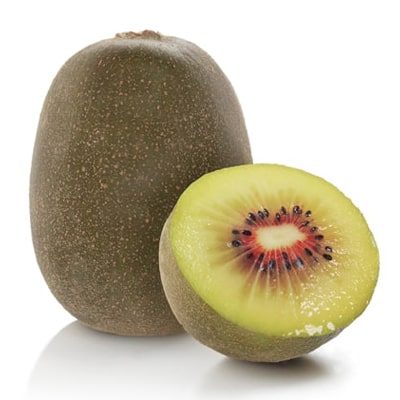
They have a characteristic dark red color in the core, yellow flesh, and the sweetest-exotic taste a kiwi can give you. Their peel is smooth with a complete lack of hair.
Yellow
(Dori, A19, Jinyan)
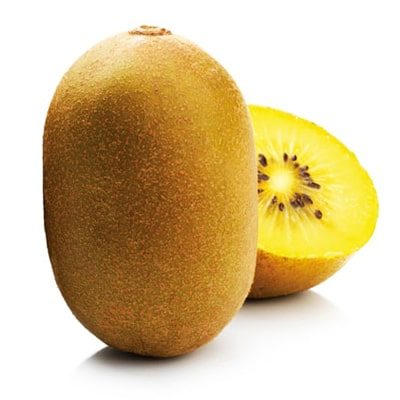
They are smooth, with no fuzz on the skin, and typical for the bright yellow color of their flesh. They have zero acidity and a sweet taste.
Green
(Hayward)
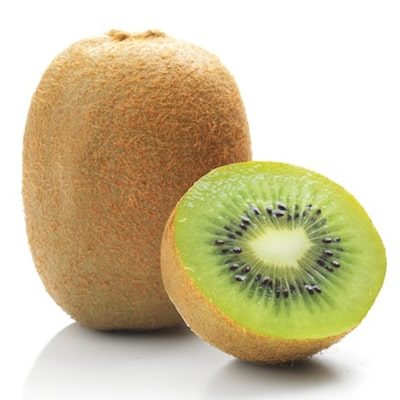
With an intense green color and a typical acidic taste, they are juicy and have firm flesh.
| January | February | March | April | May | June | July | August | September | October | November | December | ||
|---|---|---|---|---|---|---|---|---|---|---|---|---|---|
Red Passion |
Harvesting | ||||||||||||
| Availability | |||||||||||||
Don Hong |
Harvesting | ||||||||||||
| Availability | |||||||||||||
Dori |
Harvesting | ||||||||||||
| Availability | |||||||||||||
A19 |
Harvesting | ||||||||||||
| Availability | |||||||||||||
Jinyan |
Harvesting | ||||||||||||
| Availability | |||||||||||||
Hayward |
Harvesting | ||||||||||||
| Availability | |||||||||||||
Kiwifruit Production Cycle
European kiwifruit from Greece stands out for its intense flavor, high nutritional value, and exceptional quality. This quality results from a combination of favorable climate conditions, suitable soil, and decades of growers’ experience. Kiwifruit growing regions are characterized by mild winters and warm, humid summers, conditions that favor the development of fruit with rich aroma, juicy flesh, and vibrant colors. The soil is typically fertile with slightly acidic pH, ideal for the growth of strong and healthy vines.
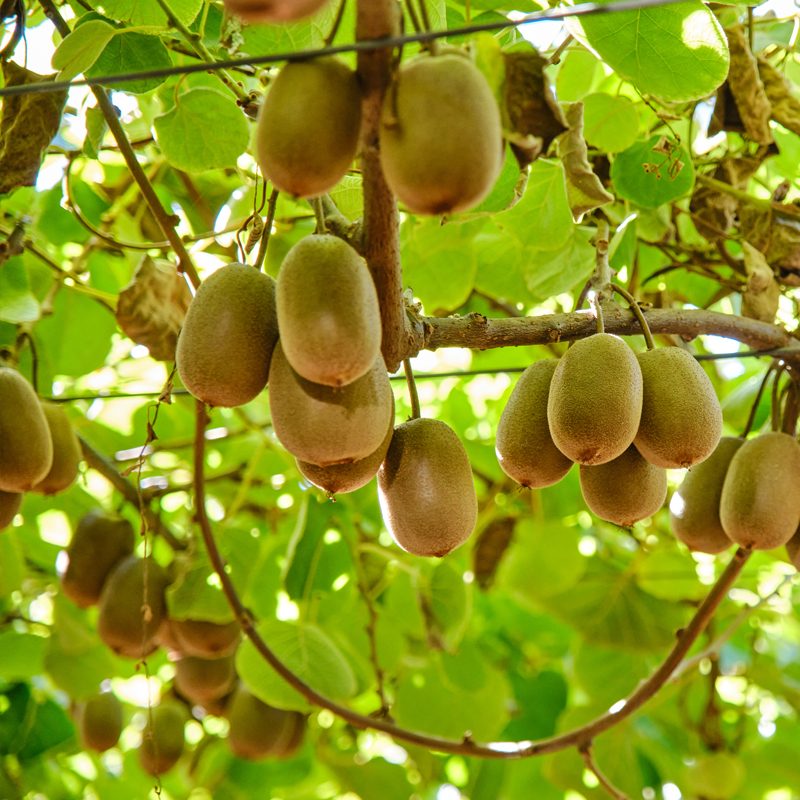
1. Orchard Establishment and Care
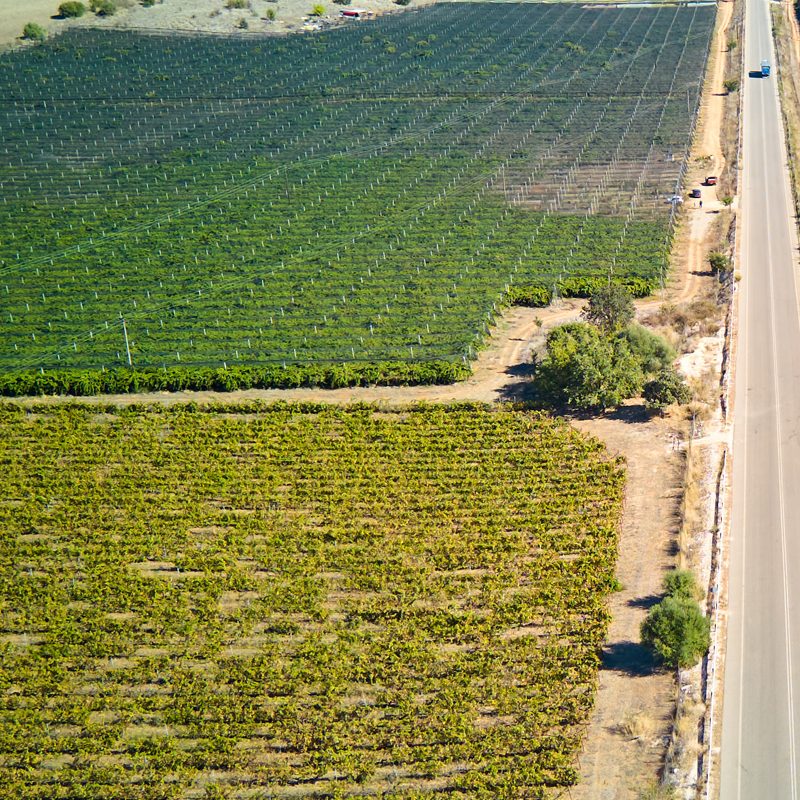
Kiwifruit production begins with careful orchard site selection and planting planning. For orchard establishment, soils with good structure and adequate drainage are chosen. Plants are selected based on rootstock type and variety, ensuring resilience to local conditions and production uniformity. During the first years, cultivation practices focus on proper establishment and rapid plant development.
Growers carry out training cuts and pruning to maintain healthy growth, proper light distribution, and canopy aeration. Pruning is mainly done during winter dormancy, with supplementary summer pruning to improve fruit ripening and color.
2. Fertilization and Irrigation
Fertilization is applied following soil and leaf analysis to determine the appropriate nutrients that will ensure strong vines and high-quality fruit.
Proper irrigation is critical, as kiwifruit has high water requirements. Insufficient water supply significantly reduces yield and affects fruit quality, while excessive or poorly managed irrigation can also impact future harvests.
3. Integrated and Environmentally Friendly Production
The majority of Greek kiwifruit is grown under Integrated Fruit Production (IFP) systems, according to European and national standards. This system combines environmentally friendly production methods based on the rational use of all agricultural inputs, reduced use of chemical products, and controlled cultivation practices. The goal is to produce safe, certified-quality fruits while protecting growers, consumers, and the environment.
4. Flowering, Fruit Set, and Fruit Development
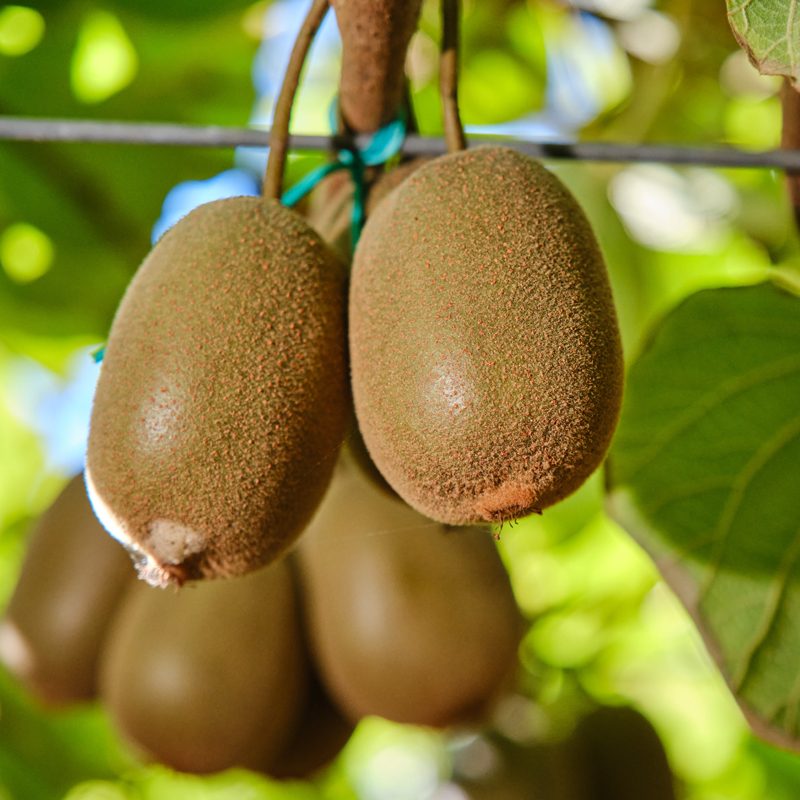
Kiwifruit blooms in spring, and successful pollination, mainly by bees, is crucial for fruit set. In some cases, to enhance pollination, bumblebee hives are placed in orchards, while artificial pollination may be used if male plants are absent. After fruit set, fruit thinning is applied to ensure proper development, size, and flavor of the final fruit.
During summer, vines receive nutrition and protection against diseases and pests. Light and humidity management contributes to improved fruit color and taste.
5. Harvest and Post-Harvest Management
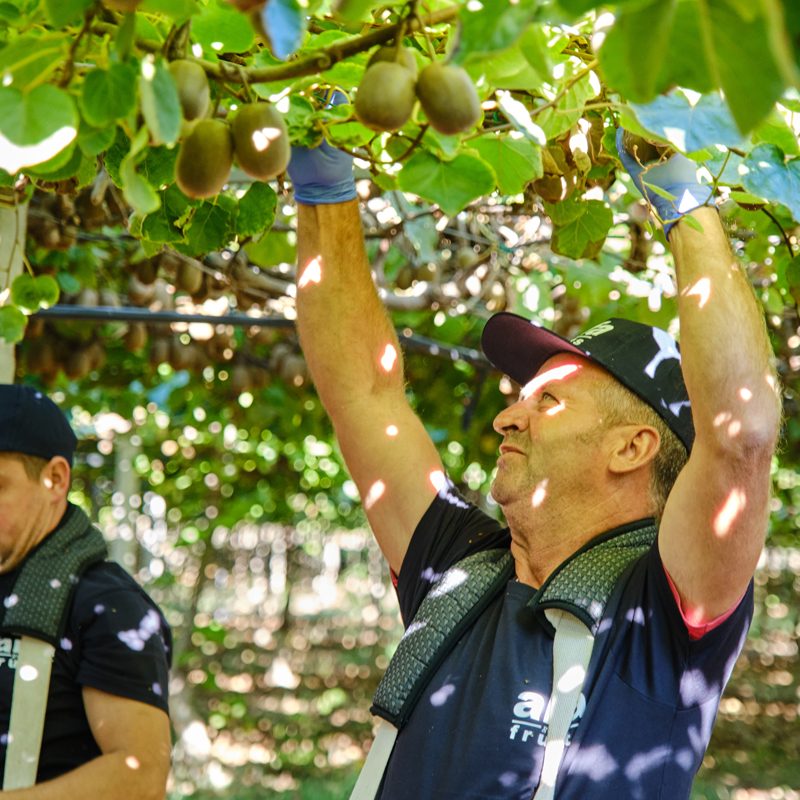
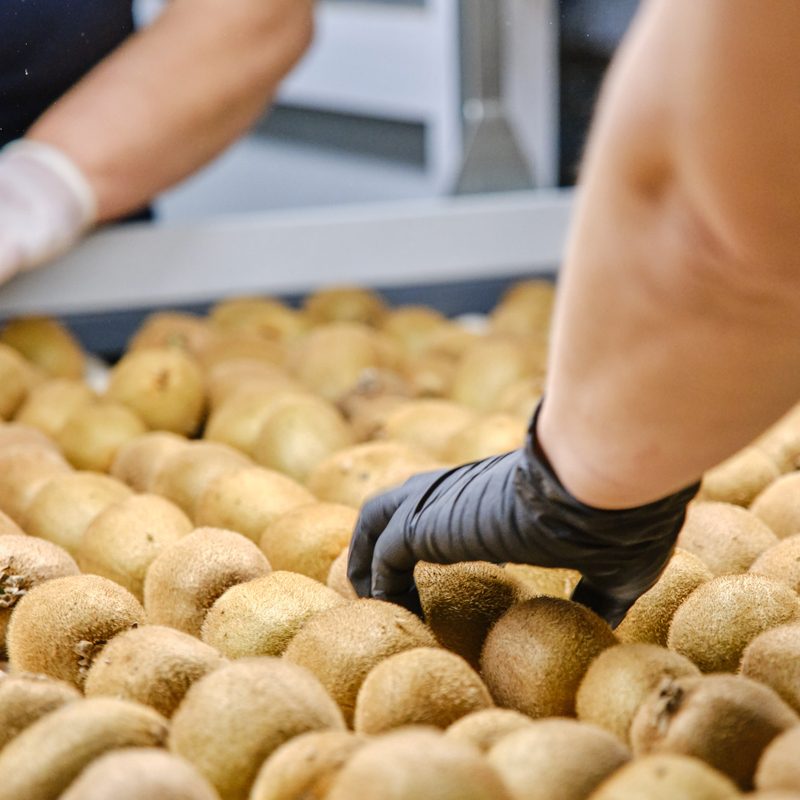
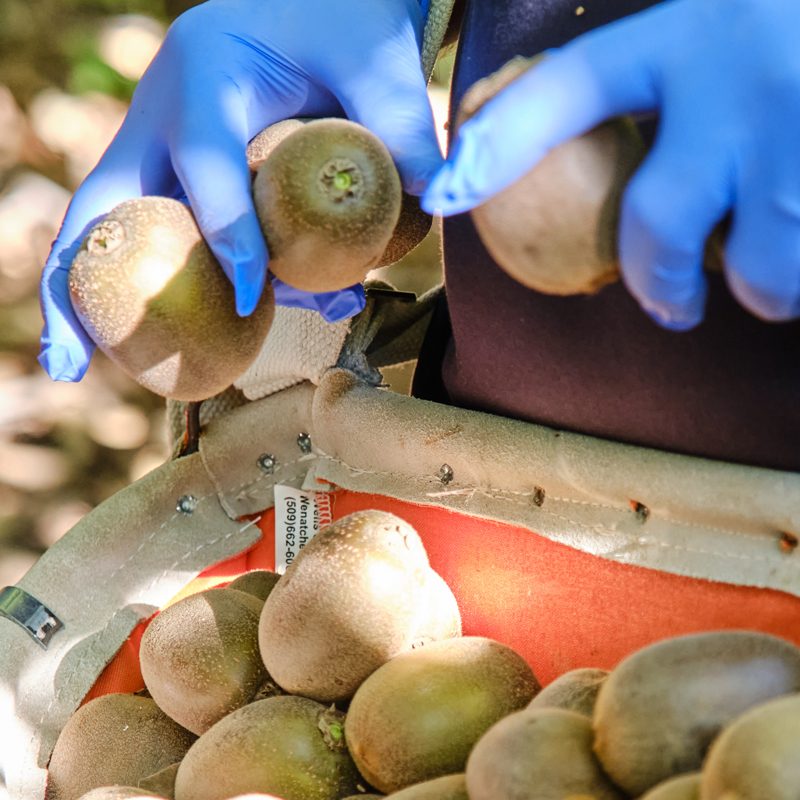
Harvest takes place from late September to mid-November, depending on the variety. Fruit is carefully hand-picked to avoid skin damage and subsequent deterioration. Only mature, high-quality fruit is selected for storage and export.
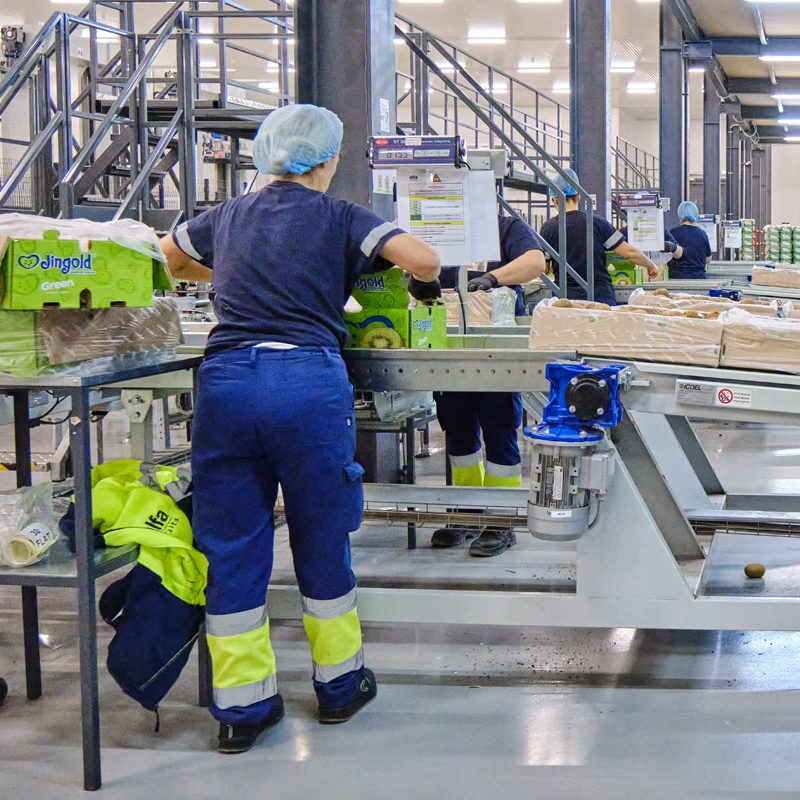
After harvest, kiwifruits are transferred to cold storage facilities, where they are kept under controlled atmosphere conditions, with temperature and humidity levels that preserve freshness, flavor, and nutritional value.
For every batch arriving at the packing facility, samples are collected by agronomists and sent to accredited laboratories for residue analysis, ensuring compliance with Maximum Residue Levels (MRLs) for plant protection products.
In the orchard, plants continue to receive care through pruning, fertilization, and irrigation, as described in previous stages, in order to remain healthy and prepare for the next production cycle. In this way, cultivation practices are repeated annually, ensuring consistent yields and high fruit quality in each new cycle.
6. Export and Traceability
In the competitive global market, exporting European kiwifruit requires not only high-quality production but also full transparency at every stage of the supply chain. For this reason, strict and comprehensive traceability systems are implemented, forming a cornerstone of operations and a guarantee for international partners.
Each batch of kiwifruit intended for export is accompanied by a detailed information “passport,” accurately recording all critical production stages, from the orchard to final storage. Specifically, the traceability system includes:
- Origin and Cultivation: Information about the producer, the exact geographical location of the orchard, the kiwifruit variety, applied cultivation practices, fertilizers and plant protection products used (with application dates), and harvest timing. This provides a full picture of the sustainable agricultural practices followed.
- Sorting and Packaging: Records include sorting and packing facilities, processing dates, sorting methods (e.g., by size and quality), packaging materials, and storage conditions before shipment.
- Transport and Storage: Information extends to transport conditions (e.g., temperature and humidity), transport means, routes and transit times, as well as cold storage conditions until final loading.
This thorough documentation ensures full backward and forward traceability of the product. This transparency, combined with strict quality certifications (such as GlobalG.A.P., BRC, IFS, etc.), significantly strengthens the trust of importers, distributors, and ultimately consumers. Traceability is not simply a procedure; it is a commitment to safety, quality, and reliability—key elements for establishing European kiwifruit in international markets.
7. Quality, Taste, and Reliability
Every stage of production aims to create kiwifruit that are safe, delicious, and visually appealing. The combined influence of climate, soil, and growers’ expertise results in fruit with vibrant color, balanced flavor, and high vitamin content. Furthermore, integrated management practices ensure that European kiwifruit is of high quality and reliable for international markets.